- contact@insightaml.com
AI agents
Agents that prepare the case, and people who decide it
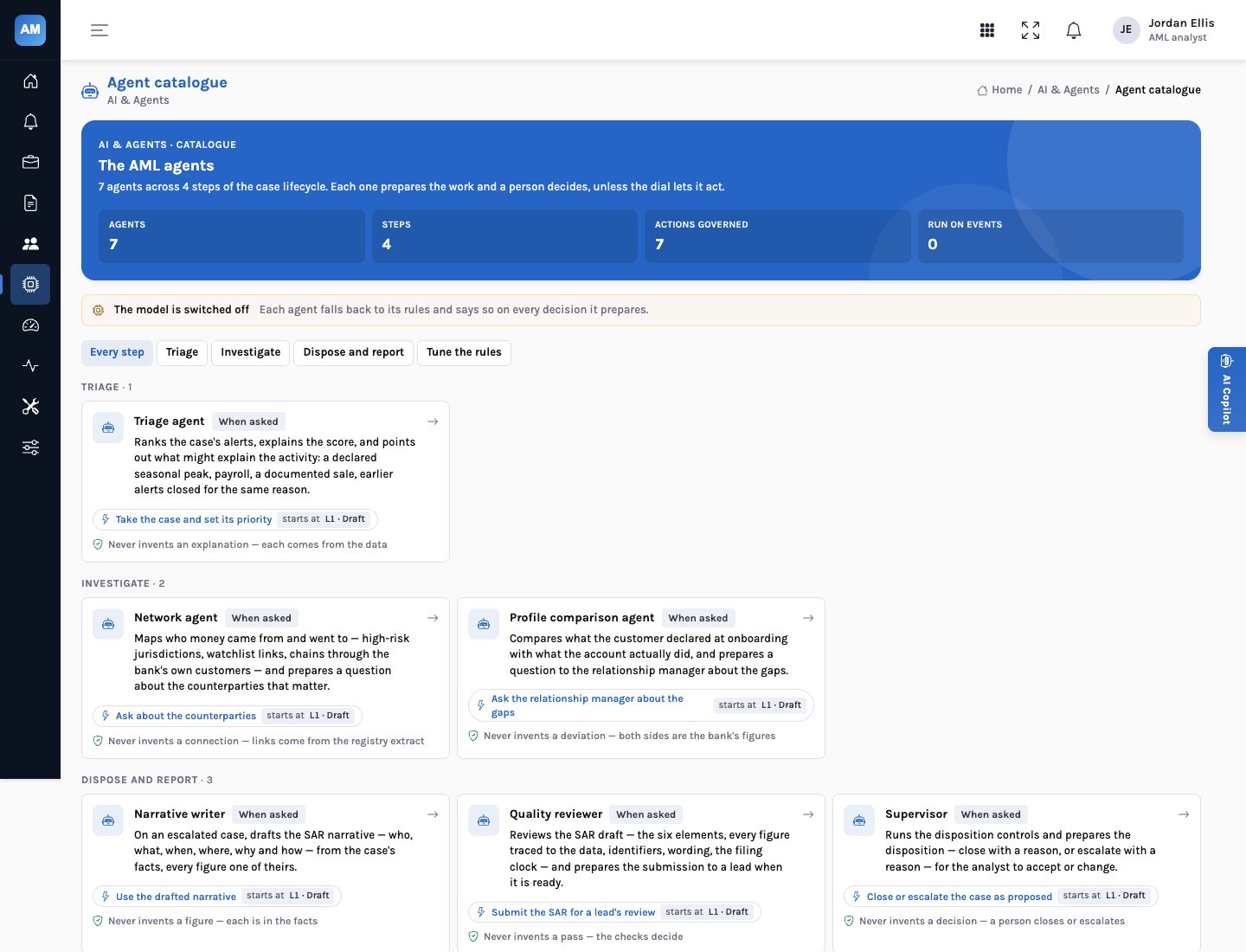
Seven agents: triage, profile comparison, network, supervisor, narrative writer, quality reviewer and tuning analyst. They rank, compare, map and draft. They don’t close, escalate, send, file or tune.
The seven agents
One step each, and a line none of them crosses
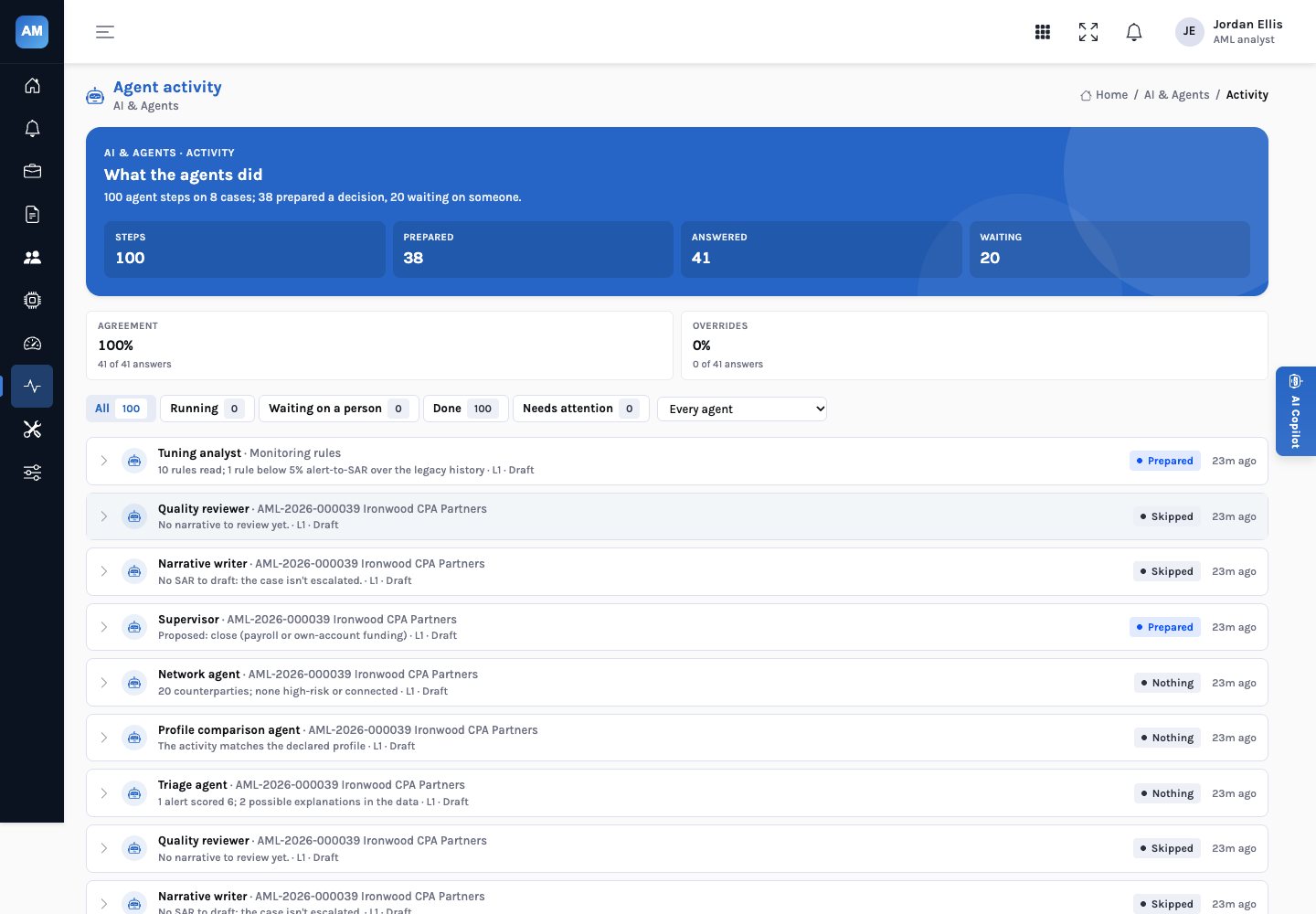
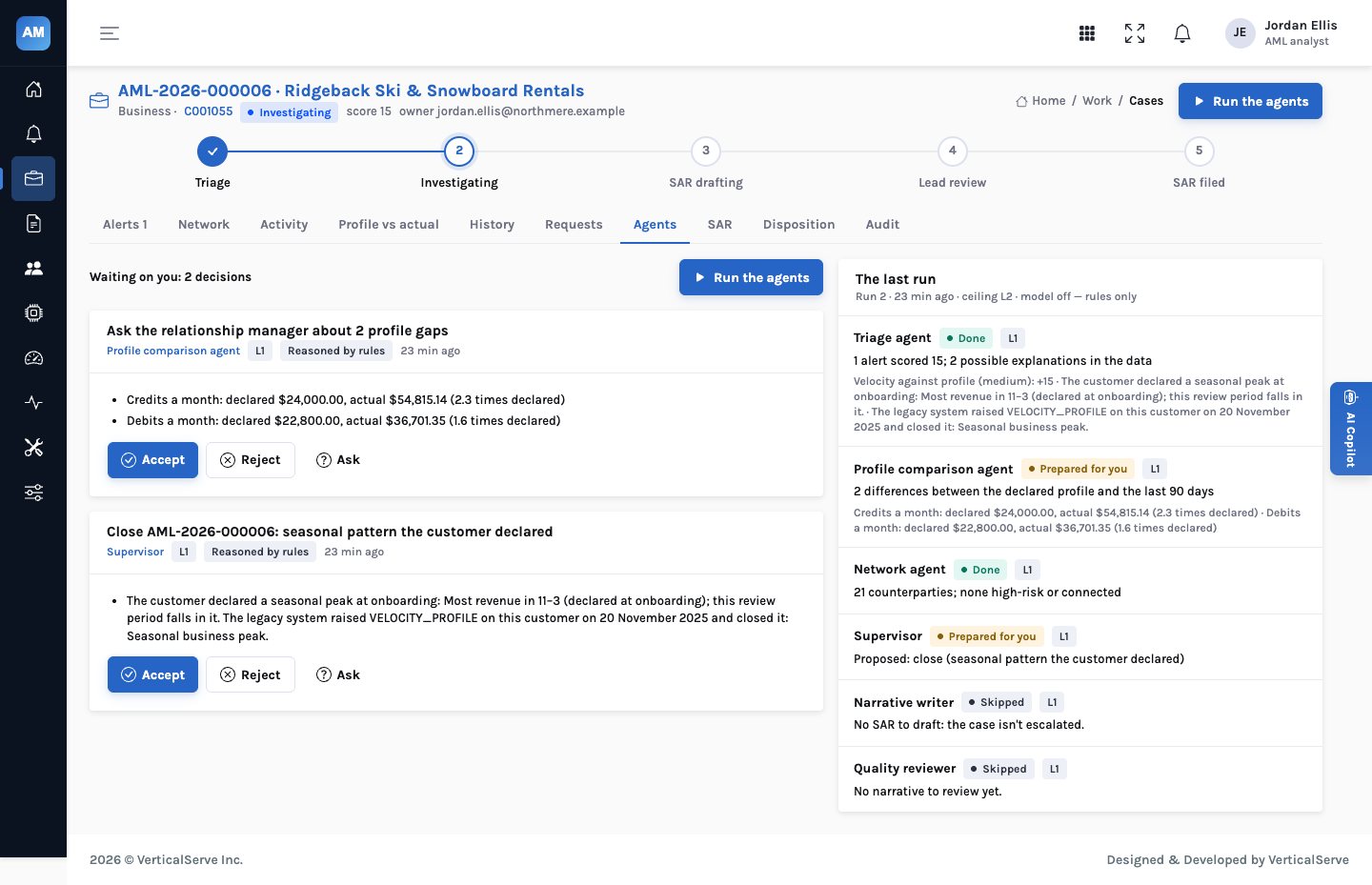
“Run the agents” on a case runs six of them in order, each as itself at its autonomy level. The seventh, the tuning analyst, works on the rules. What they prepare waits for a person: accept, reject or ask.
| Agent | Step | What it prepares | What it never does |
|---|---|---|---|
| Triage agent | Triage | Ranks the alerts, explains the score, finds what might explain them (a declared seasonal peak, payroll, a documented sale, earlier alerts closed for the same reason); prepares taking the case | Invent an explanation: each comes from the data |
| Profile comparison agent | Investigate | The declared profile against the last 90 days; a question to the relationship manager about the gaps | Invent a deviation: both sides are the bank’s figures |
| Network agent | Investigate | The counterparties that matter: high-risk jurisdictions, watchlist links, chains through the bank’s customers; a question about them | Invent a connection: links come from the registry extract |
| Supervisor | Dispose and report | Runs the disposition controls and proposes close or escalate, with a reason | Close or escalate a case |
| Narrative writer | Dispose and report | On an escalated case, the six-part SAR narrative from the case’s facts | Add a figure that isn’t in the facts |
| Quality reviewer | Dispose and report | Reviews the draft against twelve checks; prepares the submission to a lead when it is ready | Pass a check the checks didn’t pass, or submit |
| Tuning analyst | Tune the rules | Each rule’s alert-to-SAR rate and close reasons; a tuning proposal with its effect on this period’s alerts | Apply a change: only a lead tunes |
Autonomy
Capped at L2, whatever the setting
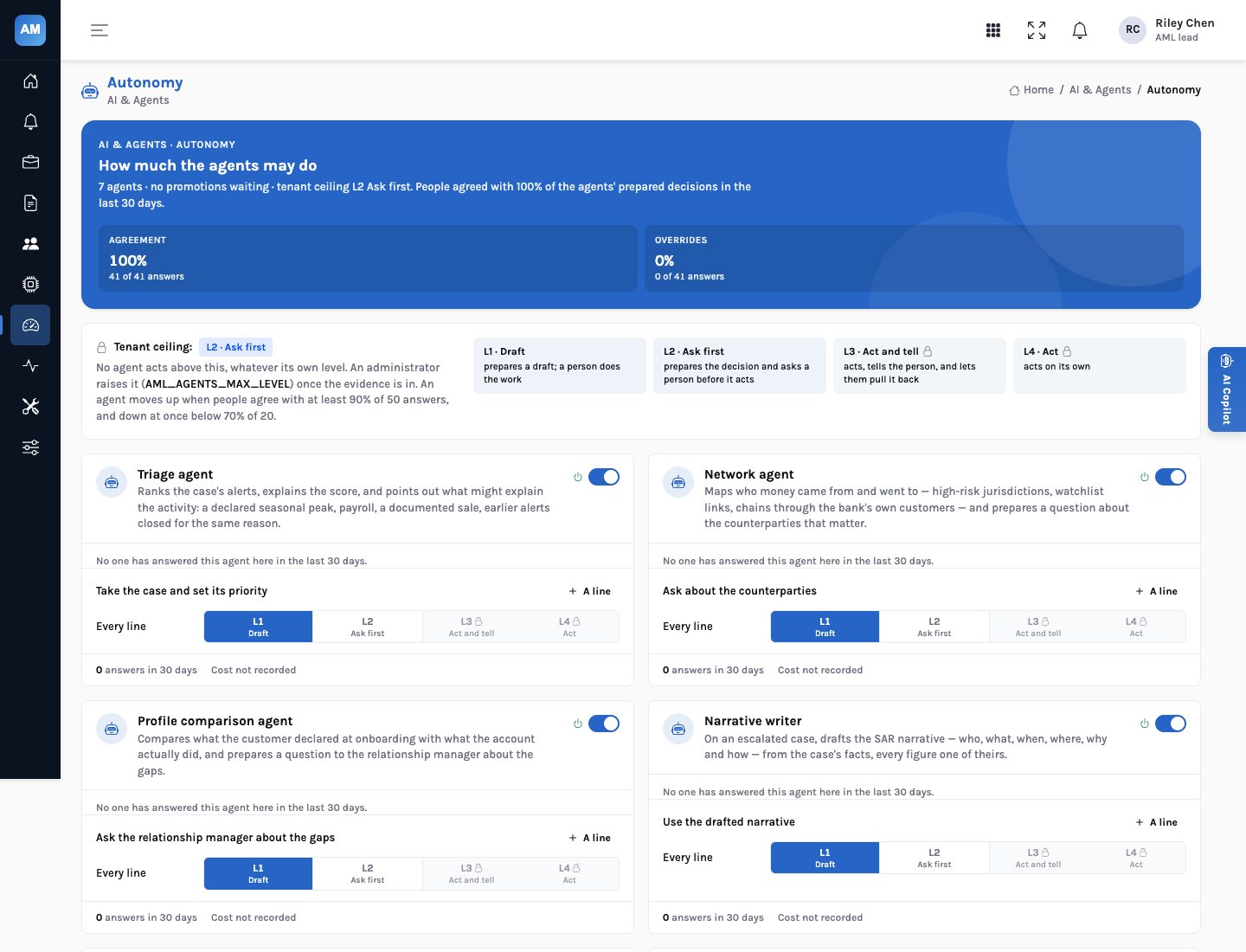
An administrator sets each agent’s level per action, under a tenant ceiling (AML_AGENTS_MAX_LEVEL). InsightAML adds a hard cap of its own: every action is capped at L2, so no agent closes, escalates, sends, files or tunes anything. The autonomy page shows how often people agreed with each agent.
| Level | Name | What the agent may do |
|---|---|---|
| L1 | Draft | Prepares a draft; a person does the work. Where every agent starts |
| L2 | Ask first | Prepares the decision and asks a person before it acts. The hard cap for every InsightAML action, in the code |
| L3 | Act and tell | Acts, tells the person, and lets them pull it back. Not available to InsightAML agents |
| L4 | Act | Acts on its own. Not available to InsightAML agents |
Grounding
The model explains. It never supplies the facts.
Every figure is the engines’: the rules, the score, the network, the profile comparison, the facts list. Where a language model is configured (Amazon Bedrock in the reference set-up), it reasons and drafts over numbered facts, and an answer carrying a name or number not in them is thrown away. On the demo shown on this site the model is switched off, and every agent says it reasoned by rules.
Deterministic
Arithmetic is code
Ratios, totals, windows, scores and the alert-to-SAR rates are computed, not generated.
Grounded
Numbered facts
Every agent works on a numbered list of facts with sources, and cites them.
Fallback
Model off is a supported mode
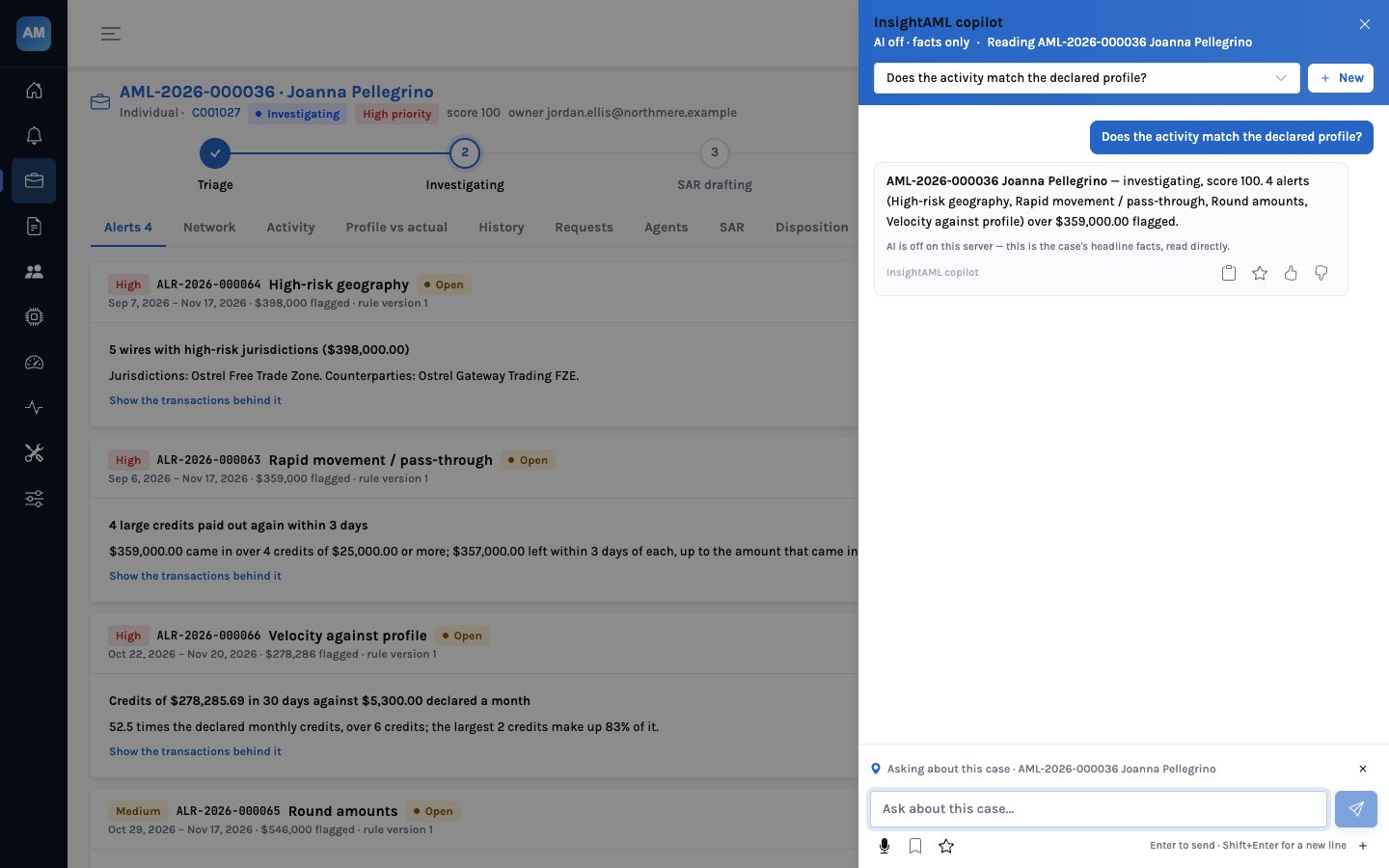
AML_AGENTS_LLM=0 runs every agent on its rules; the copilot answers with the case’s headline facts.
Prepared decisions
Accept, reject or ask
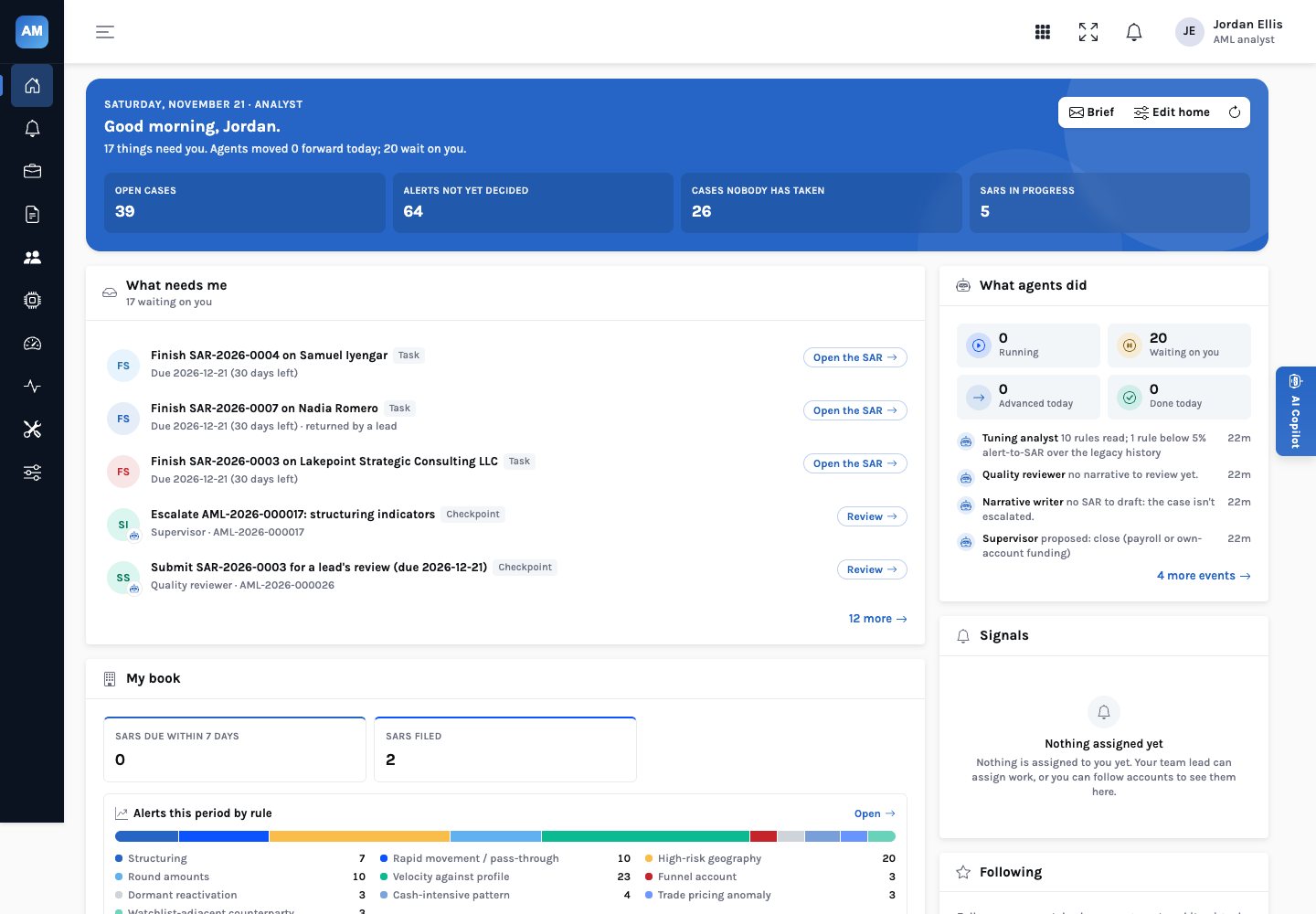
What an agent prepares lands on the case and on the person’s home. Accepting carries it out as that person; rejecting records that a person disagreed; asking sends a question back. Each answer is kept on the decision record and counts toward the agent’s agreement rate.
Copilot
A read-only copilot on every case
Eight read-only tools over the open case. It can tell you why a customer was alerted, whether the activity matches the profile, who the counterparties are and what the SAR still needs. It can’t change anything.